
Knowledge › The Prof. Stark Method › Regulation mechanisms
Regulation mechanisms: how the body gives the all-clear
Our alarm system must not only switch on. It also has to switch off again. For this, it needs feedback from the body. Without that feedback, the alarm stays on.
Alarm and feedback
When our alarm system, the amygdala, senses danger, it provides energy for “fight or flight”: the sympathetic nervous system speeds up the heart, tenses the muscles and releases our reserves.
Then the amygdala waits for feedback. It expects one of two things to have happened: we have run away from the sabre-tooth tiger, or we have fought it. Either way, our muscles have moved – and afterwards our breathing slows down, because the danger is over.
Only when this feedback arrives does the system know it can stand down. Working muscles release messenger substances called myokines. Together with slow, calm breathing, they send a signal back to the brain’s calming centre, the hippocampus, and this limits any further rise of the sympathetic system.
The toilet cistern
Think of a toilet cistern. Water flows in until the cistern is full. Then the float rises and closes the inlet, so that nothing overflows.
Movement and slow breathing are the float. If the float never rises – because the body hardly moves and the breathing stays shallow – the inlet stays open, and the alarm system keeps supplying energy that is never used.
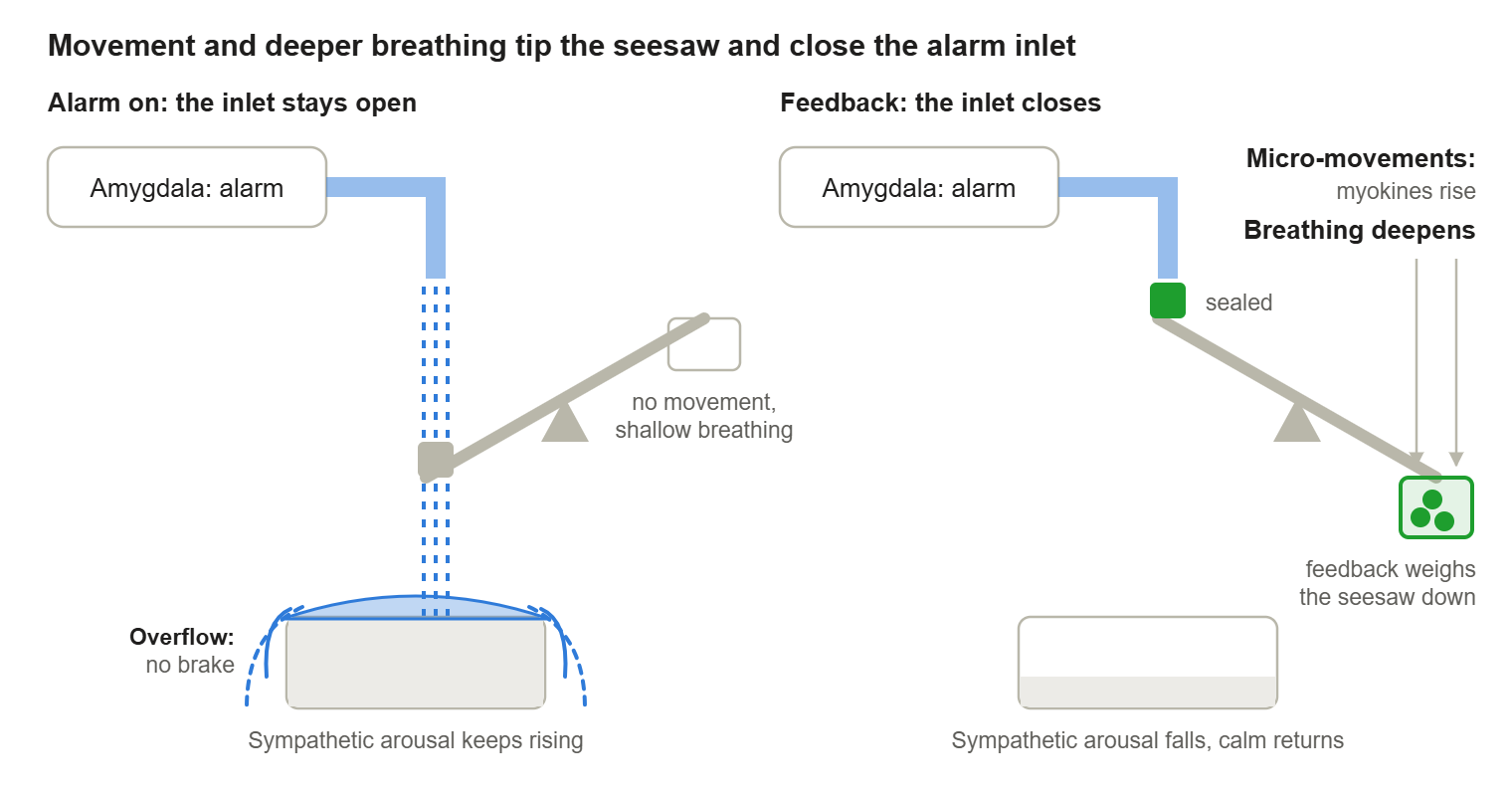
Left: the alarm keeps the inlet open and arousal keeps rising. Right: myokines from small movements and deeper breathing weigh down the seesaw; its other end rises and seals the inlet.
What this means in everyday life
Today, we often hardly move when we are under stress: we sit at a desk, brood, hold our breath. The alarm receives no feedback and stays on. This means:
- Small movements are often enough. Stand up, take a few steps, roll your shoulders, open and close your hands. Even people who have to lie down a lot can work with very small movements, such as moving toes and fingers.
- Breathe out slowly. Calm, extended breathing tells the body: the danger is over.
- Regularly rather than a lot. Several short moments a day work better than rare, strenuous ones. Avoid creating new pressure to perform.
This model complements the sabre-tooth tiger reflex: the tiger explains how the alarm switches on; the regulation mechanisms explain how it switches off.